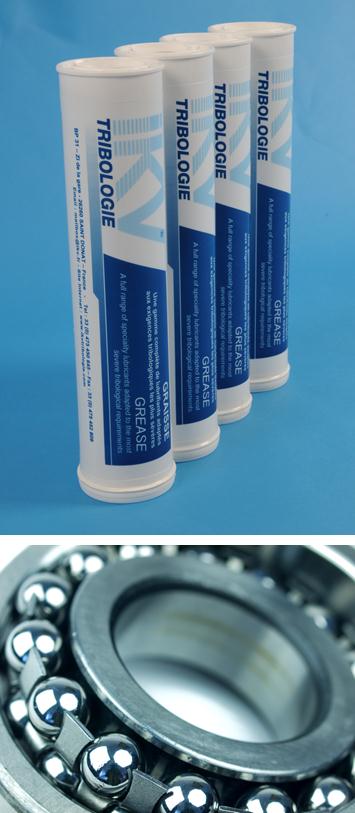
Greases & Gels
Our grease and gel lubricants extend from conventional mineral oil based lithium, calcium and barium greases through to synthetic oil based greases including polyurea, silicone and fluorinated greases for use in extreme high and low temperatures.
We also produce a range of greases with additives including EP (extreme pressure), anti-wear, anti-corrosion, anti-oxidant and non-melting thickeners.
We specialise in supplying food grade NSF H1 and 3H registered, non-toxic, food approved greases for use where there is risk of direct and indirect contact with food products, drinks, pharmaceuticals and food packaging.
High temperatures degrade certain lubricants very rapidly, however, using the latest synthetic technology enables us to increase the durability of the grease, machinery and components even at the highest temperatures.
Low temperatures are another consideration when selecting a grease. Many lubricants solidify at very low temperatures, however, we provide greases based upon special synthetic oils which perform at temperatures as low -90°C.
We supply gels and pastes for specific lubrication applications including assembly aids, thread compounds and electrical components.
We also have an extensive range of environmentally friendly, biodegradable greases.
A grease is made up of three main types of ingredient, a fluid or oil, a thickener and additives.
Why use a grease?
Greases are generally used where oil systems are not appropriate or practical for example, in a wheel bearing on a car. In some applications the grease can be sealed in the bearing, providing lifetime lubrication, in others it is neccesary to rejuvenate the grease by adding more periodically and purging the old grease.
What are the different types of grease?
Greases are generally divided by the type of thickener, however, the base oil type and properties must be considered as well as the additives included within the grease. The properties of the greases vary according to their make up.
Thickeners such as lithium, calcium, sodium, barium, aluminium and other metallic soaps are used along with non-soap thickeners such as bentone, silica and polyurea.
The type of base oils used include mineral oils, vegetable oils, synthetic fluids, esters, silicones, polyglycols and fluorocarbons, to name a few.
Additives are included to enhance the properties of the grease such as anti-oxidants, anti-wear, extreme pressure, anti-rust and solid lubricants (Molybdenum di-sulphide, graphite, PTFE etc).
Greases are classified according to their consistency which indicates the hardness or softness of the grease. This is measured by a penetrometer which consists of a cone of specific weight and size dropped into the grease for 5 seconds, the penetration is then measured and the grease classified. The system generally used is the ISO system or NLGI (National Lubricating Grease Institution) standard. The following table shows the NLGI classification and compares each grade with household products of similar consistency.
NLGI consistency numbers
| NLGI number | ASTM worked (60 strokes) penetration at 25 °C tenths of a millimetre | Appearance | Consistency food analogy |
|---|---|---|---|
| 000 | 445-475 | fluid | cooking oil |
| 00 | 400-430 | semi-fluid | apple sauce |
| 0 | 355-385 | very soft | brown mustard |
| 1 | 310-340 | soft | tomato paste |
| 2 | 265-295 | moderately soft | peanut butter |
| 3 | 220-250 | semi-fluid | vegetable shortening |
| 4 | 175-205 | semi-hard | frozen yoghurt |
| 5 | 130-160 | hard | smooth pate |
| 6 | 85-115 | very hard | cheddar cheese spread |